
Introduction
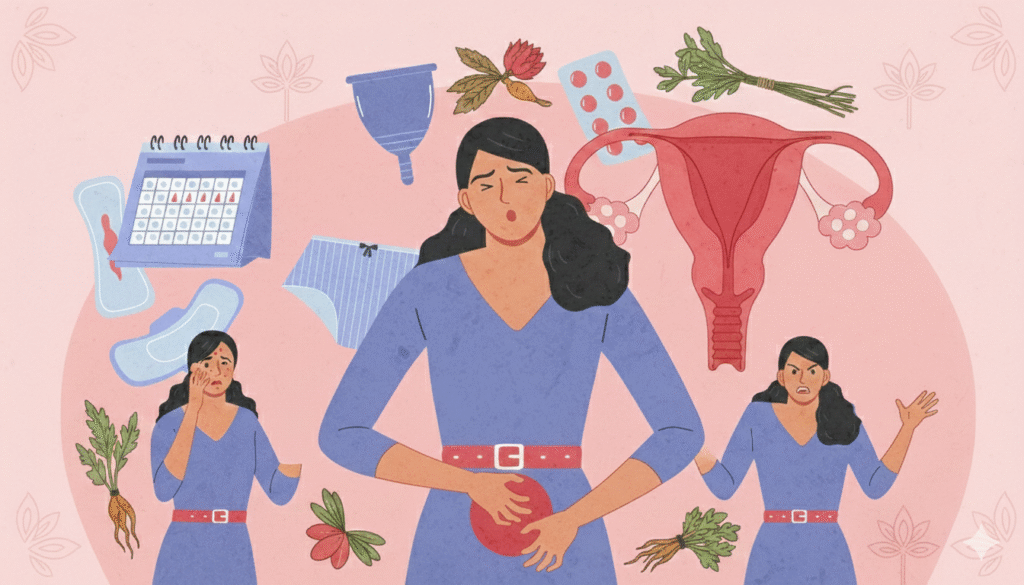
Women’s health has emerged as a major public health concern due to the increasing prevalence of gynaecological disorders influenced by lifestyle changes, stress, dietary imbalance, and hormonal disturbances. In Ayurveda, these conditions are described under Strī Rogas, which encompass disorders of menstruation, reproduction, and gynaecological health. Ayurveda offers a holistic and individualized approach to the management of Strī Rogas through principles of Dosha balance, Agni regulation, Purification treatments, Shamana, and Rejuvenation therapies.
Common Strī Rogas
1. Artava Vyapad (Menstrual Disorders)
Artava Vyapad includes conditions such as dysmenorrhea, menorrhagia, oligomenorrhea, and irregular menstrual cycles. These disorders are commonly caused by Vata and Pitta dosha vitiation, impaired digestion and mental stress.
2. Yoni-vyapad
Yoni-vyapad refers to gynaecological disorders affecting the female reproductive tract, including pain, discharge, itching, infections, etc. These conditions may be caused by the vitiation of Vata, Pitta, or Kapha dosha individually, or by the combined imbalance of all three doshas (Tridoshaja), often influenced by improper hygiene, suppression of natural urges and sedentary lifestyle.
3. Polycystic Ovarian Syndrome (PCOS)
Polycystic Ovarian Syndrome (PCOS) is one of the most common disorders affecting women in the present era. Ayurvedic principles and treatment protocols focus on correcting the condition from its root by restoring doshic balance, improving Agni, and normalizing Dhatu function. This holistic approach not only helps in effective management of PCOS but also provides relief to both the body and the mind, thereby promoting overall well-being.
Conclusion
Prevailing Strī Rogas pose significant challenges to women’s health in contemporary society. Ayurveda, with its holistic and individualized approach, offers effective management through purification treatment, Rejuvenation therapies, and lifestyle modifications. Early diagnosis, preventive care, and integration of Ayurvedic practices can play a vital role in promoting long-term gynaecological health and overall well-being.